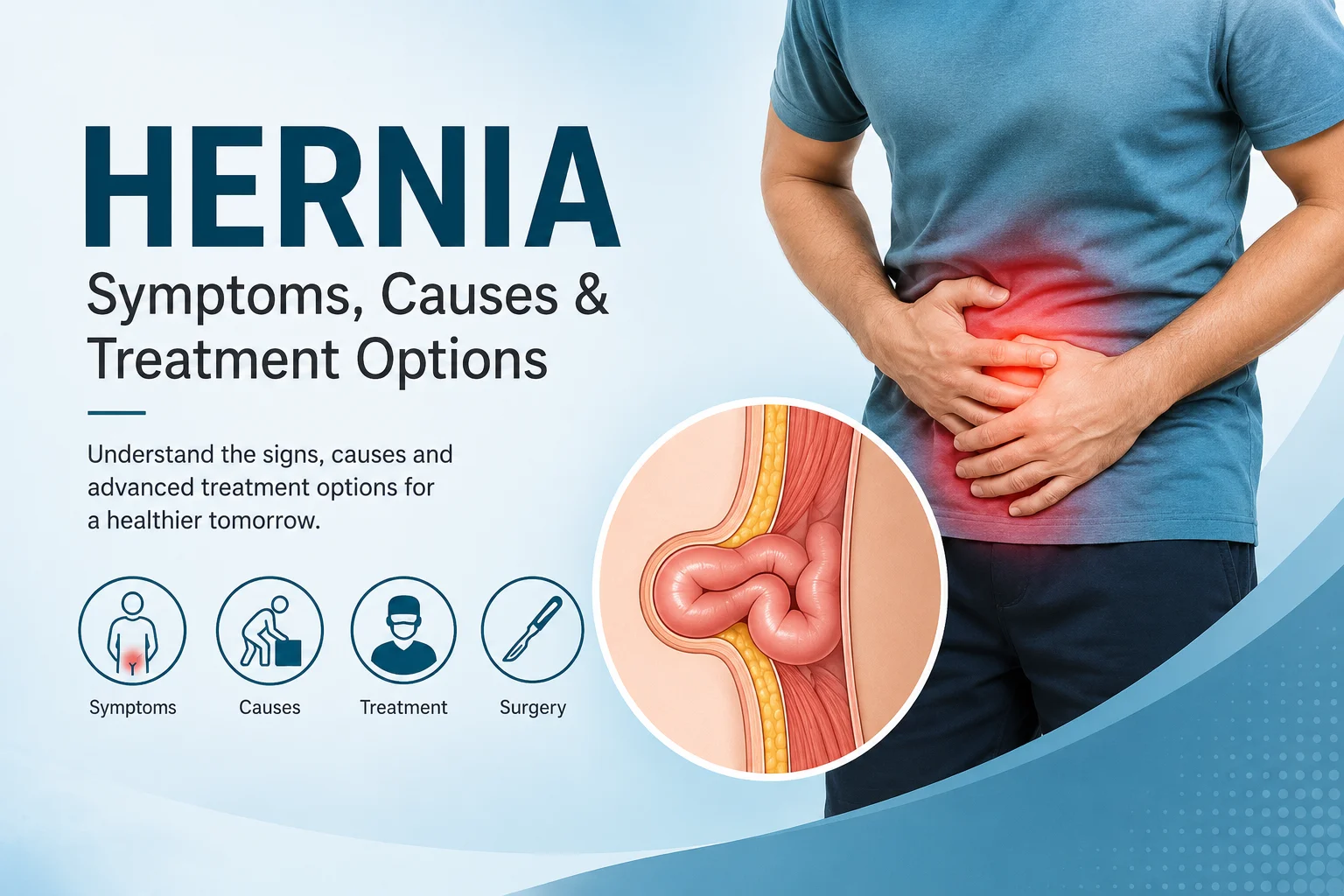
Many people first notice an inguinal hernia as a soft swelling in the groin that gets bigger when they stand, cough or lift something, and goes back when they lie down. It is common, especially in men. This article explains, in plain language, why it forms, which symptoms need prompt attention, how it is assessed, and when repair is discussed. It is educational information from Sree Nandaka Advanced Surgery / Dr. Praveen Koduru. It is not a diagnosis.
When to seek urgent care
If a groin bulge becomes hard, very painful, red or cannot be pushed back, especially with vomiting, a swollen abdomen or not passing stools or gas, go to an emergency department or call the hospital straight away. These can be signs that the hernia is trapped and needs emergency treatment.
What Is an Inguinal Hernia?
An inguinal hernia appears in the groin. It happens when fatty tissue or part of the bowel pushes through a weak area in the lower part of the abdominal wall. In men the swelling can extend towards the scrotum. It can be present on one side or on both sides, and it can appear gradually or after a strain.
For an overview of all hernia types and the care offered at the hospital, see the page on laparoscopic hernia surgery in Kompally.
Why Does It Happen?
The groin is a natural weak point in the abdominal wall. Things that increase pressure inside the abdomen, or weaken the muscle wall, can add to the risk. Common links include:
- Heavy lifting or physically demanding work
- A long-term cough, for example in smokers or people with chest problems
- Straining with constipation or when passing urine
- Weight gain or obesity
- Increasing age, as the muscle wall becomes weaker
- A previous hernia, or a family history of hernias
Common Symptoms
- A bulge in the groin that gets bigger when you stand, cough or lift
- A swelling that may go back when you lie down
- A heavy, dragging or aching feeling in the groin, often worse by the end of the day
- In men, swelling that extends into the scrotum
Some people have no pain at all. Even then, it is worth having the swelling examined, because other groin swellings can look similar and only an examination can tell them apart. A bulge at the belly button may instead be an umbilical hernia, and a bulge near an old operation scar may be an incisional hernia. Our article on how to know if you have a hernia covers the early signs.
How Is It Diagnosed?
A surgeon usually diagnoses an inguinal hernia by examining the groin while you stand and cough, and again while you lie down. Sometimes an ultrasound is advised to confirm the hernia or to check a swelling that is hard to feel. Please mention any earlier hernia repair or abdominal surgery, because this helps the surgeon plan.
When Is Repair Advised?
As described on the Sree Nandaka hernia page, an inguinal hernia does not go away on its own. When it causes symptoms or gets bigger, it is usually repaired by surgery. The surgeon may advise laparoscopic (keyhole) or open repair, usually with a mesh, including 3D mesh in selected cases. For a small inguinal hernia with no symptoms, the surgeon may sometimes advise watchful waiting with regular check-ups. Watchful waiting is a medical decision, not a reason to ignore the swelling, and it is often not appropriate for women with groin hernias. Points that are usually discussed include:
- Whether the hernia is causing pain, getting bigger or has ever become stuck
- Whether the hernia is on one side or both sides
- Any earlier hernia repair or abdominal surgery
- Your general fitness for anaesthesia and any other medical conditions
- Steps that may help before surgery, such as controlling a cough, constipation, blood sugar or weight, and stopping smoking
Our earlier articles on when laparoscopic hernia repair is discussed and laparoscopic hernia repair explain the keyhole approach in more detail. For what minimally invasive surgery means more generally, see laparoscopic surgery in Kompally. If you are wondering whether a hernia can be managed without an operation, read can hernia be treated without surgery?
Before and After Surgery
- Follow the fasting instructions you are given before the operation
- Tell the surgeon about all your medicines, especially blood thinners and diabetes medicines
- After surgery, avoid heavy lifting and straining for the period your surgeon advises
- Eat a fibre-rich diet and drink enough water to avoid constipation
- Keep the wounds clean and dry, and attend follow-up visits
- Report fever, increasing redness, discharge from a wound, increasing swelling or a new bulge
Hospital stay and return to work depend on the type of hernia, the type of repair and your overall health. Your surgeon will tell you what to expect in your case.
Preparing for Your Consultation
- Note when you first noticed the bulge and whether it has grown
- Note whether it goes back when you lie down, and on which side it is
- Mention any pain, episodes when the bulge would not go back, or vomiting
- Bring any scan reports, earlier operation notes and a list of your current medicines
Contact details for Sree Nandaka Advanced Surgery:
- Address: Plot 771, Jayabheri Park, Kompally, Hyderabad
- Phone: 9000861000
- WhatsApp: 7672001070
- Email: info@sreenandaka.com
Hernia care at Sree Nandaka is planned under Dr. Praveen Koduru, MBBS, MS (General Surgery), FIAGES, FISCP, a laparoscopic surgeon with 20+ years of experience. Meet the surgeon on
Dr. Praveen Koduru’s profile.
Medically reviewed by Dr. Praveen Koduru, MBBS, MS (General Surgery), Telangana State Medical Council Reg. No. 45306.
Final Thoughts
An inguinal hernia is common and treatable. It does not go away on its own, so it is worth having a groin bulge examined, knowing the warning signs, and discussing with a surgeon whether and when repair makes sense for you.
Patient education disclaimer
This article is general educational information from Sree Nandaka Advanced Surgery / Dr. Praveen Koduru. It does not replace clinical examination, diagnosis, emergency care, or personalised medical advice. Please consult a qualified doctor about your symptoms; treatment recommendations should be made only after you have been assessed. No success rates, guarantees, or individual patient outcomes are implied.
Groin Bulge? Speak to Our Hernia Team
Call 9000861000 or WhatsApp 7672001070 · Plot 771, Jayabheri Park, Ruby Block, Kompally, Hyderabad 500014 · Or use the contact form to request an appointment.
Call Us: 90008 61000