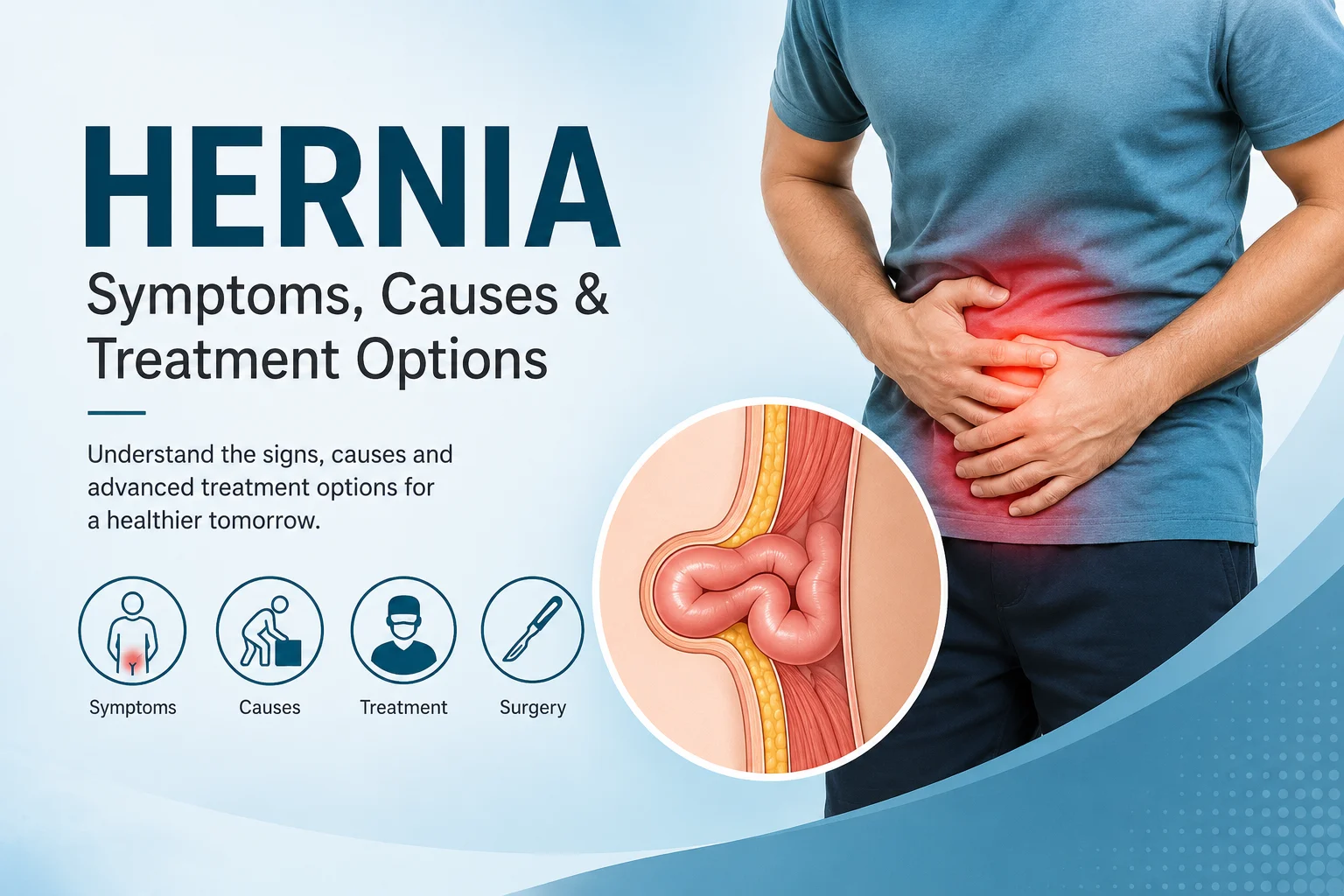
A soft bulge at or near the belly button that becomes more noticeable when you cough, lift or stand is a common reason adults see a general surgeon. Very often this is an umbilical hernia, or a paraumbilical hernia when it sits just above or beside the navel. This article explains, in plain language, why it happens in adults, which symptoms need prompt attention, how it is diagnosed, and when repair is discussed. It is educational information from Sree Nandaka Advanced Surgery / Dr. Praveen Koduru. It is not a diagnosis.
When to seek urgent care
If the bulge becomes hard, very painful, red or cannot be pushed back, especially with vomiting or a swollen abdomen, go to an emergency department or call the hospital straight away. These can be signs that the hernia is trapped.
What Is an Umbilical Hernia?
A hernia happens when tissue from inside the abdomen, usually fat or a loop of bowel, pushes through a weak spot in the muscle wall. The belly button is a natural weak point because of how the abdominal wall forms before birth. In babies, an umbilical hernia often closes by itself, although a doctor should still check it. In adults, the weak spot usually does not close without surgery, and the hernia may slowly get bigger over time.
For an overview of the different hernia types and the care offered at the hospital, see the page on laparoscopic hernia surgery in Kompally.
Why Does It Happen in Adults?
Anything that raises the pressure inside the abdomen for a long time can stretch the area around the navel. Common links include:
- Pregnancy, especially more than one pregnancy
- Weight gain or obesity
- A long-term cough
- Straining, for example with constipation or heavy lifting
- Fluid build-up in the abdomen in some medical conditions
- A previous operation near the navel, which can weaken the muscle wall
A bulge near an older surgical scar may instead be an incisional hernia, which is also described on the hernia page.
Common Symptoms
- A soft swelling at or near the navel that is more visible when you cough, strain or stand
- The swelling may get smaller or disappear when you lie down
- A dragging feeling, discomfort or ache around the belly button
- Discomfort that worsens with lifting, bending or long periods of standing
Some small hernias cause no pain at all and are noticed only by chance. Even then, it is worth having the swelling examined so that you know what it is and what to watch for.
How Is It Diagnosed?
A surgeon usually diagnoses an umbilical hernia by examining the area while you stand and cough. An ultrasound scan may be advised when the swelling is small, when the diagnosis is unclear, or to check the size of the gap in the muscle. The surgeon will also ask about other health conditions, medicines, previous operations and anything that increases pressure in the abdomen, such as a chronic cough or constipation.
When Is Repair Advised?
Because an adult umbilical hernia usually does not close on its own, surgical repair is considered the definitive treatment when it is clinically indicated. As described on the Sree Nandaka hernia page, depending on the size of the hernia and your health, the surgeon may advise open or laparoscopic (keyhole) repair, with or without a mesh. Points that are usually discussed include:
- Whether the hernia is causing pain or getting bigger
- The size of the gap and whether there is more than one weak spot
- Your general fitness for anaesthesia and any other medical conditions
- Previous abdominal surgery
- Whether there is also a gap between the abdominal muscles after pregnancy or weight change
Our earlier articles on when laparoscopic hernia repair is discussed and laparoscopic hernia repair explain the keyhole approach in more detail. For what minimally invasive surgery means more generally, see laparoscopic surgery in Kompally.
Before and After Surgery
- Follow the fasting instructions you are given before the operation
- Tell the surgeon about all your medicines, especially blood thinners
- After surgery, avoid heavy lifting and straining for the period your surgeon advises
- Eat a fibre-rich diet and drink enough water to avoid constipation
- Keep the wound clean and dry and attend follow-up visits
Hospital stay and return to work depend on the type of repair and your overall health, and your surgeon will tell you what to expect in your case.
Preparing for Your Consultation
- Note when you first noticed the swelling and whether it has grown
- Mention any pain, episodes when the bulge would not go back, or vomiting
- Tell the doctor about pregnancies, previous operations, cough, constipation and other health conditions
- Bring any earlier scan reports and a list of your current medicines
Contact details for Sree Nandaka Advanced Surgery:
- Address: Plot 771, Jayabheri Park, Kompally, Hyderabad
- Phone: 9000861000
- WhatsApp: 7672001070
- Email: info@sreenandaka.com
Meet the surgeon on
Dr. Praveen Koduru’s profile.
Medically reviewed by Dr. Praveen Koduru, MBBS, MS (General Surgery), Telangana State Medical Council Reg. No. 45306.
Final Thoughts
An umbilical hernia in an adult is common and treatable. It usually does not go away on its own, so it is worth having it examined, knowing the warning signs, and discussing with a surgeon whether and when repair makes sense for you. If you have a bulge at or near your belly button, please get it checked.
Patient education disclaimer
This article is general educational information from Sree Nandaka Advanced Surgery / Dr. Praveen Koduru. It does not replace clinical examination, diagnosis, emergency care, or personalised medical advice. Treatment recommendations should be made only after you have been assessed by a qualified doctor. No success rates, guarantees, or individual patient outcomes are implied.
Bulge Near the Belly Button? Speak to Our Hernia Team
Call 9000861000 or WhatsApp 7672001070 · Plot 771, Jayabheri Park, Ruby Block, Kompally, Hyderabad 500014 · Or use the contact form to request an appointment.
Call Us: 90008 61000