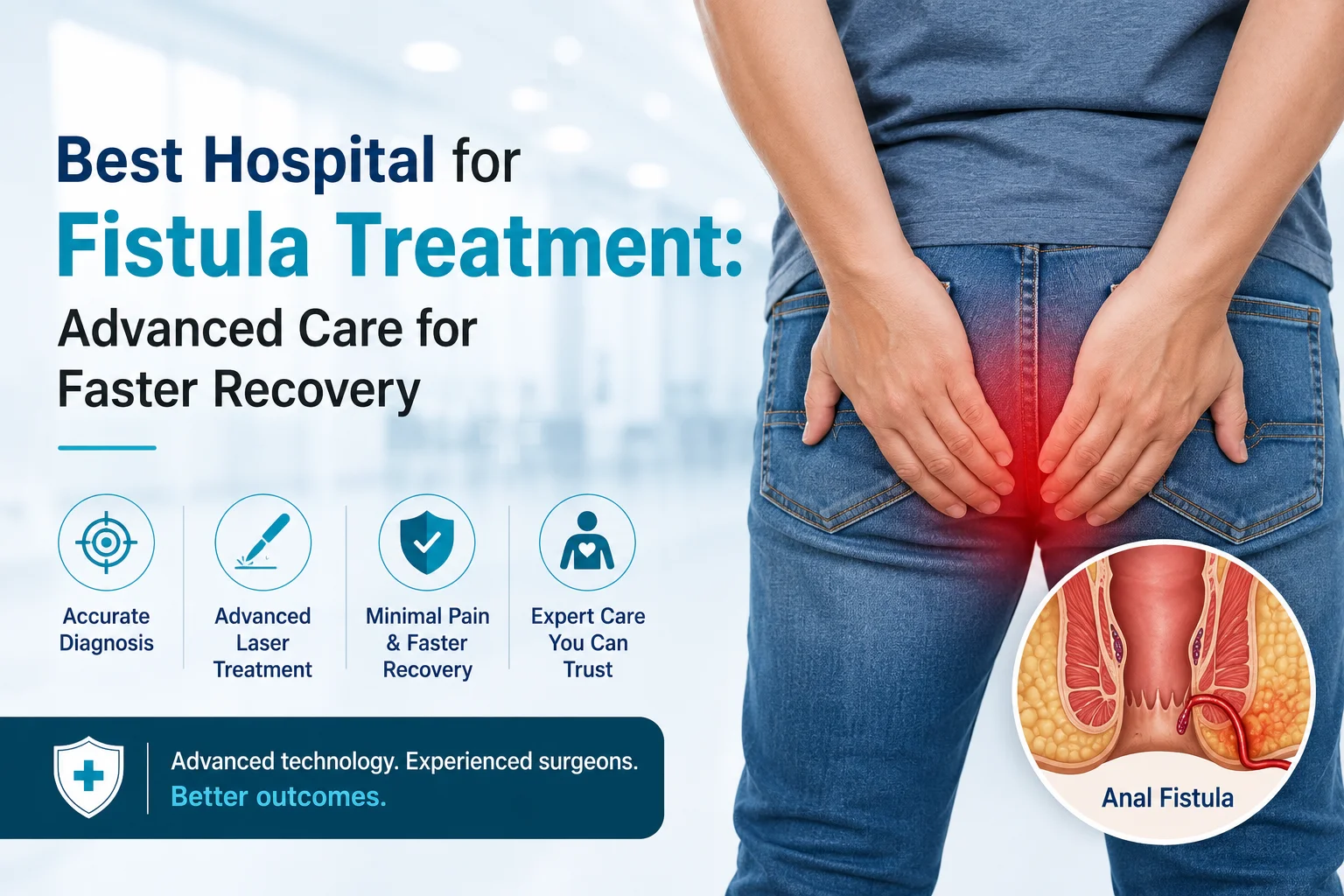
A painful, tender swelling near the anus that gets worse when you sit, sometimes with fever, is a common reason people come to a proctology clinic. Very often this is a perianal abscess, also called a rectal or anal abscess. This article explains, in plain language, what an abscess is, why it forms, why doctors usually advise draining it promptly, what recovery involves, and how it is linked to an anal fistula. It is educational information from Sree Nandaka Advanced Surgery / Dr. Praveen Koduru. It is not a diagnosis.
Do not wait for an abscess to burst
An abscess rarely settles on its own. Getting it checked early allows the pus to be drained in a planned way and lowers the chance of the infection spreading.
What Is a Perianal Abscess?
An abscess is a collection of pus. In the anal region, it usually starts when one of the small glands inside the anal canal becomes blocked and infected. The infection then tracks into the surrounding tissue and forms a painful pocket of pus. The most common type sits just under the skin around the anus (perianal). Others lie deeper, beside or above the anal muscles, and can be harder to see from the outside.
For a fuller overview of the types of abscess and the care offered at the hospital, see the page on rectal abscess treatment.
Common Symptoms
- Constant throbbing or aching pain near the anus or buttock that worsens on sitting
- A tender, red, hard or swollen lump near the anus
- Fever, with or without chills, and tiredness, especially with deeper abscesses
- Discharge of pus near the anus
- Painful bowel movements or constipation
- Sometimes difficulty passing urine or lower abdominal pain
Piles, fissures and abscesses can all cause pain in the same area, but they are different conditions. Our article on anal fissure explains how a fissure differs from piles.
Why Does an Abscess Form?
- Infection of a blocked anal gland, which is the most common cause
- Diabetes or a weakened immune system
- Inflammatory bowel disease such as Crohn’s disease
- Long-standing constipation or diarrhoea
- Some medicines, such as steroids, chemotherapy or immunosuppressants
- Smoking
How Is It Diagnosed?
A surgeon usually diagnoses an abscess from your symptoms and a gentle examination of the area, which may include a digital rectal examination. When the abscess is deep or its extent is unclear, tests such as an ultrasound or MRI scan may be advised. If an underlying condition such as Crohn’s disease is suspected, blood tests, stool tests or a colonoscopy may also be discussed.
Why Prompt Drainage Is Usually Advised
Antibiotics alone usually cannot clear a collection of pus. The standard treatment is to drain it. As described on the Sree Nandaka rectal abscess page:
- Drainage is done under local or general anaesthesia, decided by the anaesthesiologist according to the size and position of the abscess
- A small opening is made so that the pus can drain and the pressure and pain ease
- Larger or deeper abscesses may need drainage under general anaesthesia, and sometimes a small drain is placed for a while
- The wound is usually left open to heal from inside, without stitches
- Painkillers are given for comfort, and antibiotics when the doctor feels they are needed
Left untreated, an abscess can spread or lead to complications such as a fistula or a more serious infection. Seek urgent care if you have high fever, spreading redness, severe pain, or feel unwell, particularly if you have diabetes.
Recovery and Everyday Care
- Take medicines exactly as prescribed
- Eat a fibre-rich diet and drink enough water; stool softeners may be advised to avoid straining
- Keep the area clean, especially after bowel movements
- Warm sitz baths can ease soreness and swelling
- Do not miss follow-up visits
Healing time varies from person to person, and your surgeon will tell you what to expect in your case.
The Link Between an Abscess and a Fistula
An abscess is the short-term infection. In some people, after the abscess has drained, a small tunnel remains between the inside of the anal canal and the skin outside. This tunnel is called an anal fistula, and it may cause repeated discharge or repeated abscesses in the same place. This is why follow-up after drainage matters. If a fistula is found, the surgeon will explain the treatment options. You can read more on the pages for fistula treatment in Kompally and anal fistula, and in our guide to piles and fistula treatment options.
Preparing for Your Consultation
- Note when the pain or swelling started and whether you have had fever
- Mention any earlier abscess, discharge, or surgery in the area
- Tell the doctor about diabetes, bowel conditions, or medicines that lower immunity
- Bring any earlier scan reports and a list of your current medicines
Contact details for Sree Nandaka Advanced Surgery:
- Address: Plot 771, Jayabheri Park, Kompally, Hyderabad
- Phone: 9000861000
- WhatsApp: 7672001070
- Email: info@sreenandaka.com
Meet the surgeon on
Dr. Praveen Koduru’s profile.
Medically reviewed by Dr. Praveen Koduru, MBBS, MS (General Surgery), Telangana State Medical Council Reg. No. 45306.
Final Thoughts
A perianal abscess is painful but treatable. Prompt drainage relieves the pain and pressure, simple care supports healing, and follow-up helps pick up a fistula early if one forms. If you have a painful swelling near the anus, especially with fever, please get it checked soon.
Patient education disclaimer
This article is general educational information from Sree Nandaka Advanced Surgery / Dr. Praveen Koduru. It does not replace clinical examination, diagnosis, emergency care, or personalised medical advice. Treatment recommendations should be made only after you have been assessed by a qualified doctor. No success rates, guarantees, or individual patient outcomes are implied.
Painful Swelling Near the Anus? Speak to Our Proctology Team
Call 9000861000 or WhatsApp 7672001070 · Plot 771, Jayabheri Park, Ruby Block, Kompally, Hyderabad 500014 · Or use the contact form to request an appointment.
Call Us: 90008 61000