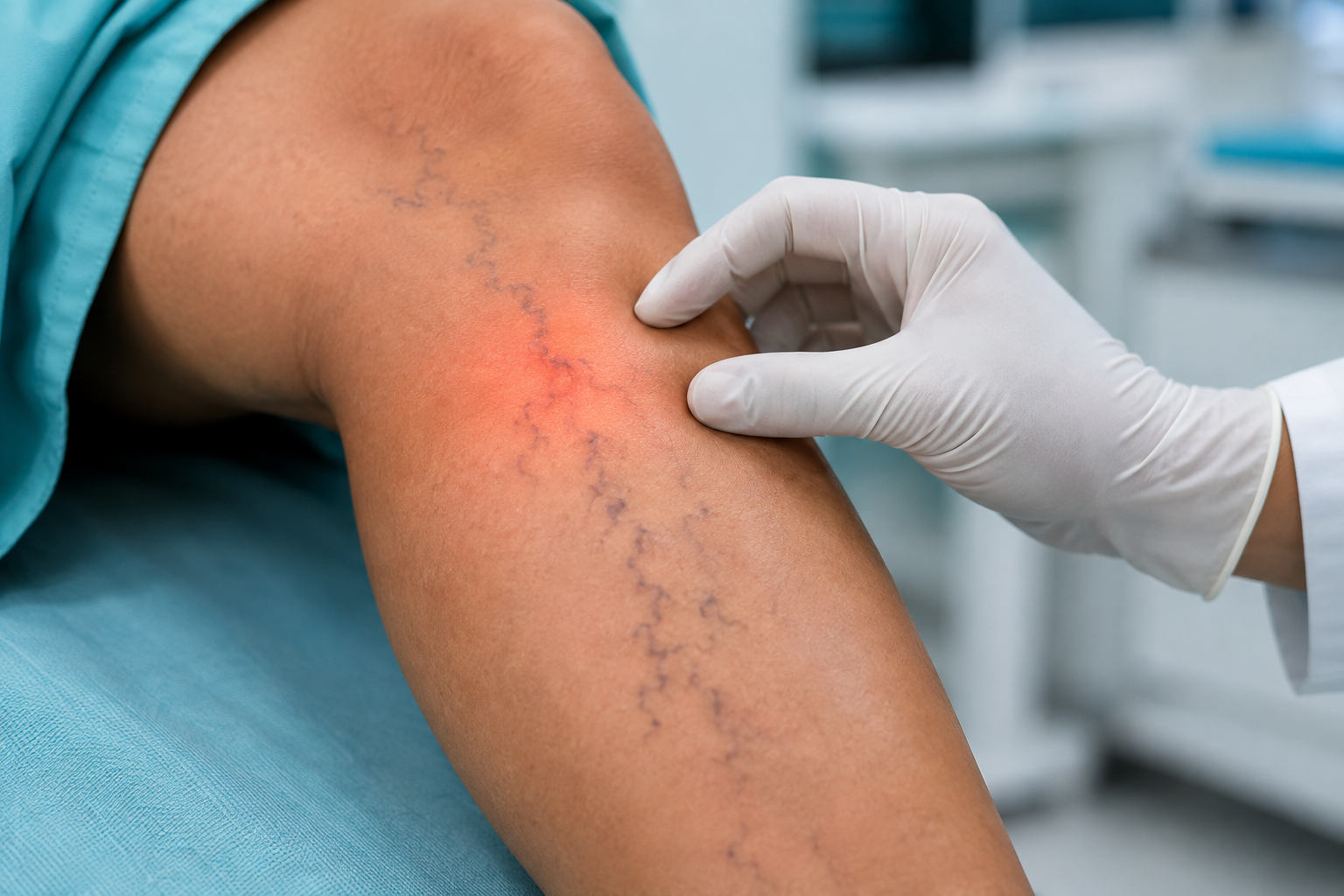
Bulging blue or purple veins on the legs, a heavy or aching feeling by evening, and swelling around the ankles are common reasons people ask about varicose veins. Some see them only as a cosmetic issue; for others they cause real discomfort. This article explains, in plain language, what varicose veins are, why they develop, how they are checked with a Doppler ultrasound scan, and which treatment options a surgeon may discuss. It is educational information from Sree Nandaka Advanced Surgery / Dr Praveen Koduru (also listed as Dr K. Praveen Kumar). It is not a diagnosis.
Get leg symptoms checked early
Varicose veins usually develop slowly. Getting them assessed when symptoms first appear makes it easier to plan simple measures and to pick up signs that need closer attention, such as skin changes around the ankle.
What Are Varicose Veins?
Veins carry blood from the legs back up to the heart. Small one-way valves inside the veins stop blood from flowing backwards. When these valves become weak or damaged, blood starts to pool in the vein. Over time the vein stretches, becomes twisted, and can be seen bulging under the skin. Because the legs carry the body's weight when we stand and walk, this is where varicose veins most commonly appear.
For a fuller overview of the condition and the care offered at the hospital, see the page on varicose veins treatment in Kompally.
Common Symptoms
- Visible twisted, bulging blue or purple veins
- Heaviness, aching, or tiredness in the legs, especially after standing
- Swelling around the ankles
- Burning, throbbing, or itching over the veins
- Night cramps
- Darkening or discolouration of the skin near the ankle
Not everyone with visible veins has symptoms, and not everyone with leg aching has varicose veins. An examination helps sort out what is causing the problem.
Why Do Varicose Veins Develop?
- Family history of vein problems
- Jobs that involve long hours of standing or sitting
- Being overweight and a lack of regular physical activity
- Pregnancy and hormonal changes
- Age-related weakening of the vein walls and valves
Some of these cannot be changed, but daily habits still make a difference. Our earlier article on how to prevent varicose veins with daily habits covers activity, leg elevation, and other simple steps.
How Are Varicose Veins Diagnosed?
Assessment usually starts with a conversation about your symptoms and a physical examination of the legs, ideally while standing. The key test is a Doppler ultrasound scan. It is painless and uses sound waves to show how blood is flowing in the veins and whether the valves are leaking. The scan helps the surgeon understand which veins are involved and how severe the problem is, which guides the treatment plan.
When to See a Surgeon
- Leg pain, heaviness, or swelling that affects daily activities
- Veins that are getting larger or more numerous
- Skin changes near the ankle, such as darkening, hardening, or eczema
- A sore or ulcer on the lower leg that is slow to heal
- Bleeding from a varicose vein
Seek urgent medical care if one leg suddenly becomes painful, swollen, red, or warm, or if a vein bleeds heavily. These can be signs of a clot or other problem that needs prompt attention.
Treatment Options a Surgeon May Discuss
Treatment depends on your symptoms, the Doppler findings, and your general health. The options described on the Sree Nandaka varicose veins page include:
- Lifestyle changes and conservative care — compression stockings, regular walking and exercise, weight management, and avoiding long periods of standing or sitting. This is often the first step for early symptoms.
- Sclerotherapy — a solution is injected into the affected veins so that they shrink and fade over time.
- Laser and radiofrequency ablation — endovenous laser ablation (EVLA) and radiofrequency ablation use heat to close the damaged vein through a needle puncture, usually without large cuts. Blood then flows through healthier veins.
- Surgery — in some advanced cases, surgical removal of the problem veins may be discussed.
Every procedure has benefits and risks, and recovery and results vary from person to person. Your surgeon will explain which option suits your situation and what to expect. Dr Praveen Koduru works across laparoscopic and laser surgery in Kompally, including vein care.
Recovery and Everyday Care
After treatment, patients are usually advised to walk regularly, wear compression stockings for the period the doctor recommends, and attend follow-up visits. Keeping active, managing weight, and raising the legs when resting all help support vein health in the long term, whether or not you have a procedure.
Preparing for Your Consultation
- Note how long you have had symptoms and what makes them better or worse
- Mention any past leg clots, injuries, or vein treatment
- Bring any earlier Doppler or ultrasound reports
- Bring a list of your current medicines
- Write down your questions so nothing is missed during the visit
Contact details for Sree Nandaka Advanced Surgery:
- Address: Plot 771, Jayabheri Park, Kompally, Hyderabad
- Phone: 9000861000
- WhatsApp: 7672001070
- Email: info@sreenandaka.com
Meet the surgeon on Dr Praveen Koduru’s profile.
Final Thoughts
Varicose veins are common and develop gradually. Simple measures help many people, and a Doppler scan gives a clear picture when symptoms are troublesome or the skin is changing. If your legs ache, swell, or show worsening veins, a consultation can explain the options in plain language.
Patient education disclaimer
This article is general educational information from Sree Nandaka Advanced Surgery / Dr Praveen Koduru. It does not replace clinical examination, diagnosis, emergency care, or personalised medical advice. Treatment recommendations should be made only after you have been assessed by a qualified doctor. No success rates, guarantees, or individual patient outcomes are implied.
Aching or Swollen Legs? Speak to Our Surgical Team
Call 9000861000 or WhatsApp 7672001070 · Plot 771, Jayabheri Park, Ruby Block, Kompally, Hyderabad 500014 · Or use the contact form to request an appointment.
Book Consultation