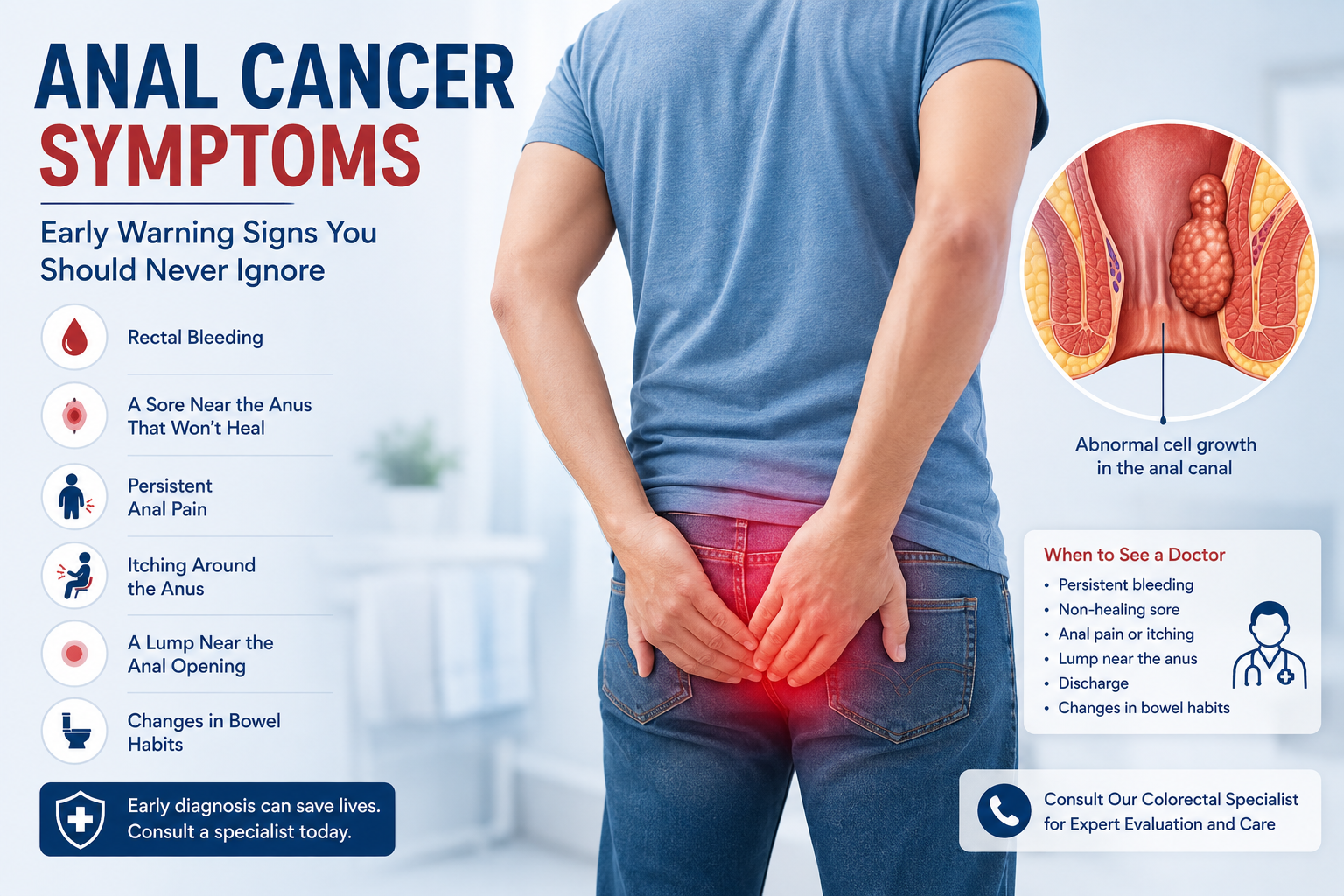
Many people dismiss discomfort around the anus as a temporary problem caused by piles (hemorrhoids), constipation, or minor skin irritation. While these conditions are common, persistent symptoms should never be ignored because they may occasionally indicate a more serious disease such as anal cancer.
Anal cancer is a relatively rare type of cancer that develops in the tissues of the anal canal—the short passage connecting the rectum to the outside of the body. Although uncommon, its incidence has gradually increased over the years, making awareness of its symptoms more important than ever.
One of the biggest reasons anal cancer is diagnosed late is that its early symptoms often resemble common anorectal conditions. Patients may assume they have hemorrhoids and continue self-medication for weeks or even months before consulting a doctor.
Recognizing the early anal cancer symptoms allows patients to seek medical attention promptly, improving the chances of successful treatment and recovery.
At Sree Nandaka Advanced Surgery Hospital, our colorectal specialists emphasize timely diagnosis because many anorectal disorders—including piles, fissures, fistulas, and anal cancer—can present with similar symptoms. Proper evaluation is the key to identifying the exact cause.
What Is Anal Cancer?
Anal cancer occurs when abnormal cells begin growing uncontrollably within the anal canal. Unlike hemorrhoids, which involve swollen blood vessels, anal cancer affects the tissues lining the anal canal and may gradually invade nearby structures if left untreated.
Although it accounts for a small percentage of gastrointestinal cancers, early detection has significantly improved treatment outcomes.
Anal cancer should not be confused with:
- Hemorrhoids (Piles)
- Anal fissures
- Anal fistulas
- Rectal polyps
- Skin tags
- Perianal abscesses
Each condition requires different treatment, making an accurate diagnosis essential.
Early Anal Cancer Symptoms
Anal cancer often develops slowly. During the initial stages, symptoms may be mild and intermittent, causing many people to overlook them.
The following symptoms deserve medical attention, especially if they continue for more than two weeks.
1. Rectal Bleeding
Rectal bleeding is one of the earliest and most common symptoms of anal cancer.
Many patients notice:
- Bright red blood after bowel movements
- Blood on toilet paper
- Blood mixed with mucus
- Occasional spotting in underwear
Because hemorrhoids also cause bleeding, patients frequently assume piles are responsible. However, persistent bleeding that does not improve with treatment should always be evaluated by a specialist.
2. A Sore Near the Anus That Won't Heal
One of the most significant warning signs is a persistent ulcer or sore around the anal opening.
Unlike small cuts or hemorrhoids that usually improve with conservative treatment, a cancer-related sore may:
- Continue for several weeks
- Bleed repeatedly
- Produce discharge
- Become painful
- Gradually enlarge
A non-healing sore should never be ignored.
3. Persistent Anal Pain
Pain associated with hemorrhoids usually occurs during bowel movements and gradually improves.
Anal cancer pain often differs because it may:
- Continue throughout the day
- Increase over time
- Become worse while sitting
- Feel deep inside the anal canal
- Interfere with daily activities
Persistent pain always warrants professional evaluation.
4. Itching Around the Anus
Occasional itching is common and usually harmless.
However, persistent itching accompanied by bleeding, pain, discharge, or swelling should not be ignored.
Anal itching associated with cancer often does not improve with creams or home remedies.
5. A Lump Near the Anal Opening
Some patients notice a small lump that gradually increases in size.
Unlike hemorrhoids, which often feel soft and swollen, a suspicious lump may be:
- Hard
- Firm
- Irregular
- Fixed to surrounding tissues
- Painful when touched
Any persistent lump should be examined by a colorectal surgeon.
6. Unusual Anal Discharge
Some patients experience:
- Mucus discharge
- Bloody discharge
- Pus-like discharge
- Foul-smelling fluid
This symptom is less common in hemorrhoids and may indicate an underlying infection or another significant anorectal condition requiring prompt diagnosis.
7. Changes in Bowel Habits
Anal cancer can affect normal bowel function.
Patients may experience:
- Difficulty passing stools
- Narrow stools
- Increased constipation
- Frequent urge to pass stools
- Feeling of incomplete bowel emptying
When these symptoms persist without an obvious explanation, further evaluation is recommended.
8. Swollen Lymph Nodes in the Groin
As the disease progresses, nearby lymph nodes may enlarge.
Patients might notice:
- Swelling in the groin
- Tenderness
- Firm lumps beneath the skin
Although this usually occurs in more advanced stages, it is an important symptom requiring immediate medical attention.
Key Takeaway
Most cases of rectal bleeding, anal itching, or pain are caused by non-cancerous conditions such as piles or fissures. However, symptoms that persist, worsen, or fail to respond to treatment should never be ignored. Early medical evaluation helps distinguish common anorectal disorders from more serious conditions like anal cancer, allowing timely diagnosis and appropriate treatment.
Anal Cancer vs Piles: Understanding the Key Differences
One of the primary reasons anal cancer is sometimes diagnosed late is because many of its early symptoms closely resemble hemorrhoids (piles). As a result, people often self-medicate with creams or home remedies without seeking a proper medical evaluation.
While piles are swollen veins in the anal canal, anal cancer develops from abnormal cell growth in the tissues of the anus. Although the symptoms may overlap, there are several important differences.
Piles vs Anal Cancer
- Piles: Soft, swollen veins
- Anal Cancer: Hard or irregular growth
- Piles: Bleeding mainly during bowel movements
- Anal Cancer: Bleeding may occur at any time
- Piles: Symptoms improve with treatment
- Anal Cancer: Symptoms continue or worsen
- Piles: Pain usually during bowel movements
- Anal Cancer: Persistent pain even at rest
- Piles: Temporary itching
- Anal Cancer: Constant itching with other symptoms
- Piles: Lump may shrink over time
- Anal Cancer: Lump gradually enlarges
- Piles: No unexplained weight loss
- Anal Cancer: Weight loss may occur in advanced stages
If symptoms continue despite treatment for piles, it is important to consult a colorectal specialist for a thorough evaluation.
Who Is More Likely to Develop Anal Cancer?
Although anal cancer is uncommon, certain factors can increase the risk of developing the disease.
Human Papillomavirus (HPV) Infection
HPV is one of the most significant risk factors associated with anal cancer. Certain strains of the virus can cause abnormal cellular changes over time.
Smoking
Tobacco use weakens the body's ability to fight abnormal cell growth and increases the risk of several cancers, including anal cancer.
Age
Anal cancer is more commonly diagnosed in individuals over the age of 50, although younger adults can also develop the disease.
Weakened Immune System
People with weakened immunity due to medical conditions or certain medications have a higher risk of developing anal cancer.
Previous HPV-Related Cancers
Individuals who have previously been diagnosed with cervical, vulvar, or vaginal cancers may have a slightly increased risk.
Chronic Anal Conditions
Long-standing inflammation, chronic fistulas, or untreated anorectal conditions may occasionally require careful evaluation, although they do not automatically lead to cancer.
When Should You Consult a Doctor?
Many anorectal symptoms improve within a few days with appropriate treatment. However, delaying medical evaluation when symptoms persist may postpone diagnosis.
Seek medical advice if you experience:
- Rectal bleeding lasting more than two weeks
- A sore near the anus that does not heal
- A lump that continues to increase in size
- Persistent anal pain
- Continuous itching despite medication
- Mucus or bloody discharge
- Difficulty passing stools
- Unexplained weight loss
- Swelling in the groin
Prompt medical assessment can identify whether the symptoms are caused by piles, fissures, infection, or another underlying condition.
How Is Anal Cancer Diagnosed?
Diagnosis begins with a detailed medical history and physical examination. Depending on your symptoms, your doctor may recommend one or more diagnostic procedures.
Physical Examination
The specialist carefully examines the anal region for ulcers, swelling, abnormal growths, skin changes, or suspicious lumps.
Digital Rectal Examination (DRE)
During this examination, a gloved and lubricated finger is gently inserted into the rectum to detect abnormal masses or irregularities inside the anal canal.
Anoscopy or Proctoscopy
A small, lighted instrument is used to inspect the anal canal and lower rectum in greater detail.
This procedure helps identify:
- Internal hemorrhoids
- Polyps
- Ulcers
- Tumors
- Areas of inflammation
Biopsy
If an abnormal lesion is identified, a small tissue sample is collected for microscopic examination.
A biopsy is the most reliable method for confirming or ruling out anal cancer.
Imaging Studies
If cancer is confirmed, imaging tests help determine the stage of the disease and whether it has spread.
Common imaging tests include:
- MRI Scan
- CT Scan
- PET Scan
- Endoanal Ultrasound (when appropriate)
These investigations guide treatment planning.
Stages of Anal Cancer
Anal cancer is classified into stages based on the size of the tumor and whether it has spread.
Stage I
- Small localized tumor
- Confined to the anal canal
- Outcomes depend on the individual case; the doctor will discuss what to expect
Stage II
- Larger tumor
- Still limited to the anal region
- Often treated successfully with combined therapy
Stage III
- Cancer has spread to nearby lymph nodes or surrounding tissues.
- Requires comprehensive treatment planning.
Stage IV
- Cancer has spread to distant organs.
- Treatment approaches focus on disease control and improving quality of life.
Early-stage diagnosis generally results in better treatment outcomes than advanced disease.
Why Early Detection Is So Important
Many patients hesitate to seek medical care due to embarrassment or the assumption that their symptoms are caused by hemorrhoids. However, early diagnosis offers several advantages:
- More effective treatment options
- Better long-term outcomes
- Reduced risk of complications
- Less extensive treatment in many cases
- Greater likelihood of preserving normal bowel function
- Improved overall quality of life
Ignoring persistent symptoms can delay diagnosis and make treatment more complex.
Evaluation at Sree Nandaka Advanced Surgery Hospital
At Sree Nandaka Advanced Surgery Hospital, our colorectal specialists evaluate patients with rectal bleeding, anal pain, persistent itching, lumps, and other anorectal symptoms using evidence-based diagnostic methods.
Our multidisciplinary approach focuses on identifying the exact cause of your symptoms and providing individualized treatment plans. Whether the diagnosis is hemorrhoids, fissures, fistulas, or another anorectal condition, our team is committed to delivering compassionate, evidence-based care.
Treatment Options for Anal Cancer
Treatment for anal cancer depends on several factors, including the stage of the cancer, the size and location of the tumor, and the patient's overall health. Advances in modern medicine have significantly improved treatment outcomes, especially when the disease is diagnosed in its early stages.
A multidisciplinary team, including colorectal surgeons, oncologists, and radiologists, works together to create an individualized treatment plan.
1. Chemoradiation Therapy
For most patients with anal cancer, a combination of chemotherapy and radiation therapy is the standard treatment.
This approach helps:
- Destroy cancer cells
- Reduce tumor size
- Preserve the anal sphincter in many cases
- Minimize the need for extensive surgery
- Improve long-term survival rates
Treatment is carefully monitored to reduce side effects.
2. Surgery
Surgery may be recommended when:
- The tumor does not completely respond to chemoradiation.
- Cancer returns after initial treatment.
- The disease is extensive or causing significant complications.
The type of surgery depends on the extent of the disease and is planned after a detailed evaluation.
3. Immunotherapy and Targeted Treatments
For selected patients with advanced or recurrent anal cancer, newer treatment options may include:
- Immunotherapy
- Targeted drug therapy
- Participation in clinical treatment protocols where appropriate
The suitability of these treatments depends on individual patient factors and specialist recommendations.
Can Anal Cancer Be Prevented?
Although not every case can be prevented, adopting healthy lifestyle habits can help reduce the risk.
Preventive Measures
- Avoid smoking and tobacco products.
- Maintain good anal hygiene.
- Eat a balanced diet rich in fiber.
- Stay physically active.
- Manage constipation effectively.
- Seek timely treatment for anorectal conditions.
- Follow safe sexual health practices.
- Attend regular medical check-ups if you are at increased risk.
Most importantly, get persistent anorectal symptoms checked by a doctor.
Lifestyle Habits That Support Colorectal Health
Maintaining good digestive health can reduce the risk of many anorectal disorders and improve overall well-being.
Healthy habits include:
- Drinking plenty of water every day
- Eating fresh vegetables, whole grains, and fiber-rich foods
- Avoiding prolonged sitting on the toilet
- Exercising regularly
- Preventing chronic constipation
- Maintaining a healthy body weight
- Seeking medical advice instead of self-medicating when symptoms persist
While these habits cannot guarantee prevention of cancer, they contribute to better colorectal health.
When Is Rectal Bleeding a Medical Emergency?
Rectal bleeding should never be ignored if it is accompanied by:
- Heavy or continuous blood loss
- Severe anal pain
- A rapidly growing lump
- Persistent fever
- Black or tarry stools
- Dizziness or fainting
- Significant weakness
- Continuous bleeding despite treatment
These symptoms require immediate medical evaluation to identify the underlying cause and begin appropriate treatment.
About Care at Sree Nandaka Advanced Surgery Hospital
Patients experiencing rectal bleeding, anal pain, itching, or persistent anorectal symptoms require accurate diagnosis and care.
Colorectal Care
- Colorectal and gastrointestinal surgeons
- Comprehensive anorectal evaluation
- Diagnostic facilities
- Evidence-based treatment plans
- Minimally invasive surgical options whenever appropriate
- Personalized patient care
- Focus on a shorter recovery for many patients and improved quality of life
Our team is committed to helping patients receive timely diagnosis, effective treatment, and compassionate support throughout their healthcare journey.
Final Thoughts
Anal cancer is uncommon, but recognizing its warning signs can make a significant difference. Symptoms such as persistent rectal bleeding, anal pain, a non-healing sore, unusual discharge, or a hard lump should never be dismissed as "just piles."
Although hemorrhoids are a far more common cause of these symptoms, only a thorough medical evaluation can determine the exact diagnosis.
If your symptoms continue for more than a few weeks or fail to improve despite treatment, consult a colorectal specialist without delay. Early diagnosis not only improves treatment outcomes but also provides reassurance by identifying the true cause of your symptoms.
At Sree Nandaka Advanced Surgery Hospital, we provide colorectal care with accurate diagnosis, personalized treatment, and compassionate patient support.
Frequently Asked Questions (FAQs)
1. What are the first symptoms of anal cancer?
Early symptoms may include rectal bleeding, persistent anal pain, itching, a sore near the anus that doesn't heal, or a lump around the anal opening.
2. Can anal cancer be mistaken for piles?
Yes. Both conditions can cause bleeding, pain, itching, and swelling. A medical examination is necessary to differentiate between them.
3. Does every anal lump indicate cancer?
No. Most anal lumps are caused by hemorrhoids, skin tags, abscesses, or cysts. However, any persistent or enlarging lump should be evaluated by a specialist.
4. How is anal cancer diagnosed?
Diagnosis typically involves a physical examination, digital rectal examination, anoscopy, biopsy, and imaging tests such as MRI or CT scans when necessary.
5. Is anal cancer treatable?
Yes. Many cases can be treated successfully, especially when diagnosed in the early stages using modern treatment approaches.
6. When should I consult a doctor for rectal bleeding?
If rectal bleeding lasts for more than two weeks, recurs frequently, or is associated with pain, discharge, a lump, or unexplained weight loss, seek medical attention promptly.
7. Can lifestyle changes reduce the risk of anal cancer?
Maintaining a healthy lifestyle, avoiding smoking, managing constipation, practicing safe sexual health, and seeking early medical care for persistent symptoms may help reduce risk.
Contact Sree Nandaka Advanced Surgery Hospital
Persistent rectal bleeding, anal pain, itching, or a sore that doesn't heal should never be ignored. Early consultation with a colorectal specialist can help identify the underlying cause and ensure timely treatment.
Sree Nandaka Advanced Surgery Hospital offers comprehensive evaluation and care for piles, fissures, fistulas, and other colorectal conditions, with a commitment to accurate diagnosis, minimally invasive treatment options, and patient-centered care.
Contact Sree Nandaka Advanced Surgery Hospital
Persistent rectal bleeding, anal pain, itching, or a sore that doesn't heal should never be ignored. Consult a colorectal specialist for accurate diagnosis and timely treatment.
Book Consultation