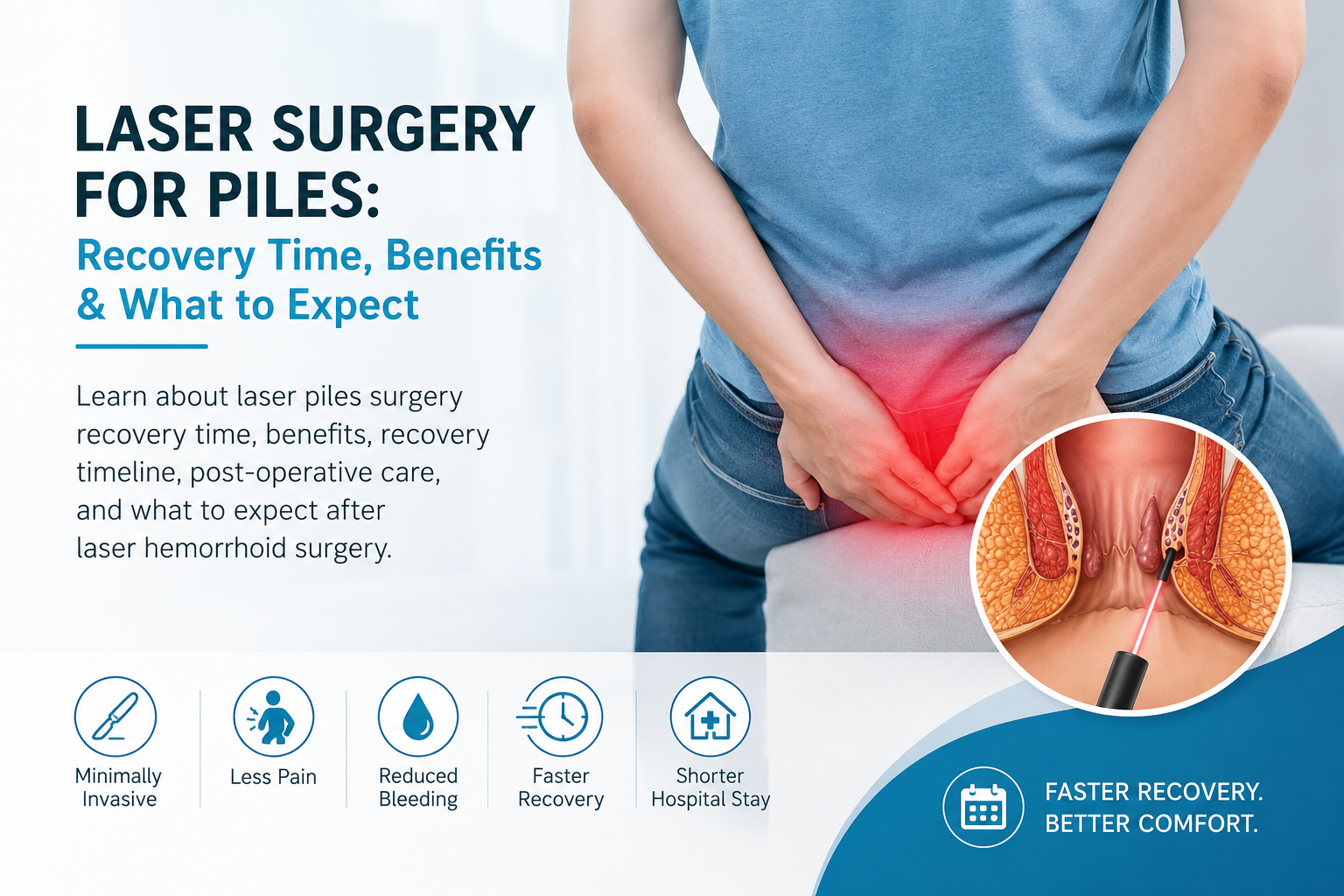
Living with piles can be physically uncomfortable and emotionally exhausting. Simple daily activities such as sitting for long periods, using the restroom, or even walking can become painful. While many people initially manage symptoms with medications and lifestyle changes, persistent or advanced piles often require medical treatment.
One of the most common concerns patients have before undergoing treatment is: "How long does it take to recover after laser surgery for piles?"
Laser treatment is one of the minimally invasive options used for piles. Compared to conventional procedures, laser surgery is designed to limit damage to surrounding tissue. Recovery time varies from person to person.
This guide explains what laser piles surgery involves, how recovery typically progresses, and practical tips to support healing.
Understanding Piles
Piles, also known as hemorrhoids, are swollen veins located inside or around the anus and lower rectum. They develop when increased pressure affects these veins over time.
Common Causes of Piles
- Chronic constipation
- Straining during bowel movements
- Sitting on the toilet for prolonged periods
- Pregnancy
- Obesity
- Low-fibre diet
- Lack of regular physical activity
While mild piles may improve with conservative treatment, advanced cases often require procedural intervention.
What Is Laser Surgery for Piles?
Laser piles surgery is a minimally invasive procedure that uses focused laser energy to treat enlarged hemorrhoidal tissue.
Instead of making large surgical cuts, the laser precisely targets affected tissue while minimising damage to surrounding healthy structures. This approach often results in reduced bleeding, less post-operative discomfort, and a shorter recovery for many patients.
The exact treatment method depends on the severity and type of piles, and your surgeon will recommend the most appropriate approach after evaluation.
When Is Laser Treatment Recommended?
- Recurrent bleeding during bowel movements
- Persistent pain or discomfort
- Prolapsed piles that do not return inside naturally
- Frequent swelling around the anal region
- Symptoms that continue despite medication and lifestyle changes
- Difficulty performing normal daily activities because of piles
Benefits of Laser Piles Surgery
Why Many Patients Choose Laser Treatment
- Minimally invasive procedure
- Pain after surgery may be less for some patients
- Reduced bleeding
- Shorter healing for many patients
- Shorter hospital stay
- Earlier return to normal routine
Recovery Timeline: What to Expect
First 24 Hours
Following the procedure, you may experience:
- Mild discomfort
- Temporary swelling
- Slight bleeding during the first bowel movement
- Tiredness related to anaesthesia
Most patients are encouraged to walk gently on the same day.
Days 2–5
- Pain usually becomes more manageable.
- Walking becomes easier.
- Bowel movements gradually become more comfortable.
- Drink plenty of water and eat fibre-rich foods.
Your doctor may prescribe medications to improve comfort during healing.
One to Two Weeks
- Return to office-based work
- Drive comfortably
- Resume household activities
- Experience significant symptom improvement
Heavy lifting and strenuous exercise should still be avoided unless approved by your surgeon.
Three to Four Weeks
Healing continues steadily, and most patients return to their regular lifestyle with minimal restrictions. Follow-up appointments help ensure recovery is progressing well.
Tips for a Smooth Recovery
- Drink adequate water throughout the day.
- Eat a high-fibre diet.
- Avoid prolonged sitting on the toilet.
- Walk regularly to improve circulation.
- Take medications exactly as prescribed.
- Keep the anal area clean and dry.
- Avoid lifting heavy objects during the early recovery period.
Foods That Support Healing
A balanced diet plays an important role after piles surgery.
- Whole grains
- Green leafy vegetables
- Lentils and legumes
- Oats
- Carrots
- Cucumber
- Pumpkin
- Plenty of water
Limiting highly processed foods and maintaining regular bowel habits can help reduce strain during recovery.
When Should You Contact Your Doctor?
- Persistent heavy bleeding
- Severe pain that does not improve with medication
- High fever
- Difficulty passing urine
- Increasing swelling or redness
- Persistent constipation despite treatment
Prompt communication with your healthcare provider helps address concerns before they become serious.
Can Piles Return After Laser Surgery?
Laser treatment effectively addresses existing piles, but recurrence is still possible if the underlying causes are not managed.
Maintaining healthy bowel habits can significantly reduce the likelihood of future problems.
Preventing Recurrence
- Eat sufficient dietary fibre
- Stay hydrated
- Exercise regularly
- Avoid prolonged constipation
- Maintain a healthy body weight
- Respond promptly to the urge for bowel movements
Frequently Asked Questions
Is laser surgery painful?
Most patients experience significantly less discomfort compared with traditional surgical techniques, although mild pain during recovery is normal.
How long does recovery usually take?
Many patients resume light activities within a few days, while complete healing generally occurs over the following weeks depending on individual recovery.
Can I return to work quickly?
Office-based workers often return within about a week, whereas physically demanding jobs may require additional recovery time based on medical advice.
Is laser treatment suitable for all piles?
Not always. The most appropriate treatment depends on the grade of piles, symptoms, and your surgeon's clinical assessment.
Will lifestyle changes still be necessary after surgery?
Yes. Healthy eating habits, adequate hydration, and avoiding constipation remain essential to support long-term results.
Final Thoughts
Piles should never be considered a condition that you simply have to live with. When symptoms begin affecting your comfort, work, or quality of life, seeking timely medical advice is the best step forward.
Laser surgery is one minimally invasive option for selected cases of piles. Discomfort and recovery time vary from person to person.
An early consultation with a colorectal or general surgeon can help determine the right treatment plan based on your symptoms, overall health, and individual needs.
Consult a Piles Specialist Today
Get an evaluation and laser treatment for piles with personalised care and a shorter recovery for many patients.
Book Consultation