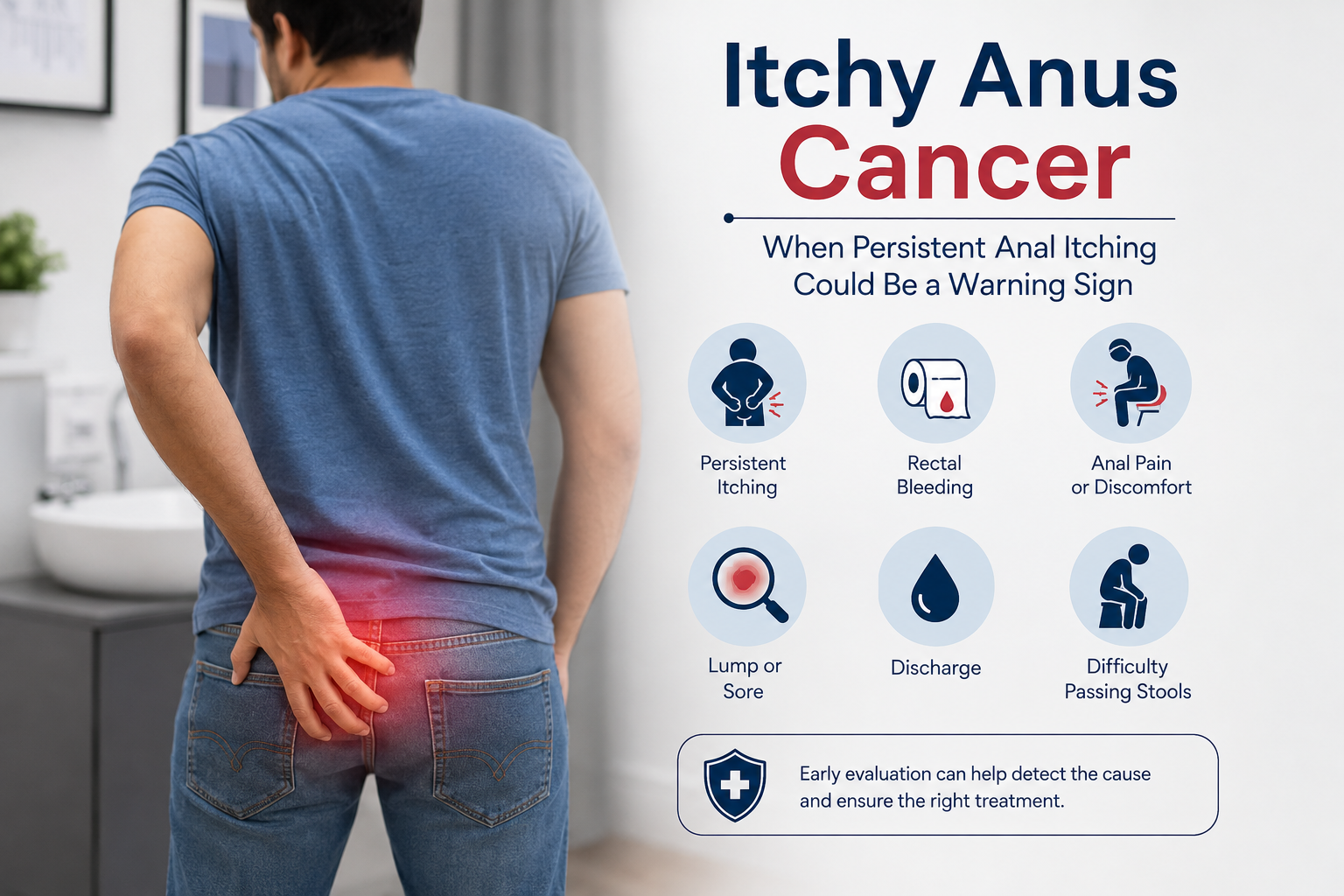
Anal itching, medically known as pruritus ani, is a common condition that affects people of all ages. In most cases, it is caused by minor problems such as excessive sweating, skin irritation, poor hygiene, hemorrhoids, fungal infections, or small anal fissures. These conditions are generally harmless and respond well to proper treatment.
However, when itching becomes persistent, severe, or is accompanied by symptoms such as rectal bleeding, pain, discharge, or a lump near the anus, it should not be ignored. Although rare, persistent anal itching can sometimes be associated with anal cancer or other serious anorectal conditions.
Many individuals hesitate to seek medical advice because of embarrassment or the belief that itching will eventually disappear on its own. Unfortunately, delaying evaluation may postpone the diagnosis of conditions that require timely medical attention.
At Sree Nandaka Advanced Surgery Hospital, our colorectal specialists encourage patients to seek evaluation if anal itching lasts for several weeks or is associated with other concerning symptoms. Early diagnosis allows appropriate treatment and offers reassurance in most cases.
Can Anal Itching Be a Symptom of Anal Cancer?
The simple answer is yes—but only rarely.
Most people with anal itching do not have cancer. Common causes such as hemorrhoids, skin irritation, infections, allergies, eczema, or fissures are far more likely.
However, anal cancer can irritate the tissues of the anal canal and surrounding skin, leading to persistent itching that does not improve with creams or home remedies.
Itching associated with anal cancer is usually not the only symptom. It may occur together with:
- Rectal bleeding
- Persistent anal pain
- A lump near the anus
- A sore that doesn't heal
- Mucus or bloody discharge
- Difficulty passing stools
- Swollen lymph nodes in the groin
If itching continues despite treatment or is associated with these symptoms, professional evaluation is recommended.
Common Causes of Persistent Anal Itching
Understanding the possible causes helps determine when medical attention is needed.
1. Hemorrhoids (Piles)
Hemorrhoids are one of the most common reasons for itching around the anus.
They may also cause:
- Bleeding during bowel movements
- Swelling
- Pain
- Burning sensation
- Moisture around the anal area
Fortunately, hemorrhoids are treatable and are not cancerous.
2. Anal Fissure
A small tear in the lining of the anus can lead to:
- Sharp pain
- Burning sensation
- Itching during healing
- Minor bleeding
Fissures usually heal with appropriate treatment.
3. Fungal or Bacterial Infections
Warm, moist skin around the anal region can encourage infections that produce:
- Intense itching
- Redness
- Skin irritation
- Discharge in some cases
These infections are generally treated with medications prescribed by a healthcare professional.
4. Skin Conditions
Certain skin disorders may affect the anal region, including:
- Eczema
- Psoriasis
- Contact dermatitis
- Allergic reactions
These conditions often require specialized dermatological or colorectal evaluation.
5. Poor Hygiene or Excessive Cleaning
Both inadequate hygiene and excessive cleaning with harsh soaps or scented products can irritate the delicate skin around the anus, leading to persistent itching.
Maintaining gentle hygiene practices is recommended.
6. Anal Cancer
Although uncommon, anal cancer may cause persistent itching because the tumor irritates the surrounding tissues.
Unlike ordinary itching, cancer-related itching usually:
- Lasts for weeks
- Does not improve with medications
- Occurs with bleeding or pain
- May be associated with a hard lump
- Can produce discharge
Warning Signs That Require Medical Evaluation
Anal itching should be evaluated by a specialist if it is accompanied by any of the following:
- Persistent rectal bleeding
- A sore near the anus that won't heal
- Severe or increasing pain
- A hard lump near the anal opening
- Bloody or mucus discharge
- Difficulty passing stools
- Swollen lymph nodes in the groin
- Unexplained weight loss
- Symptoms lasting longer than two to three weeks
These symptoms do not necessarily indicate cancer, but they require proper diagnosis to identify the underlying cause.
How Does Anal Cancer Itching Feel Different?
Cancer-related itching is often:
- Persistent throughout the day
- Resistant to home remedies
- Accompanied by pain or bleeding
- Associated with a non-healing sore or lump
- Progressive rather than intermittent
By contrast, itching caused by hemorrhoids or skin irritation usually improves with appropriate treatment and lifestyle changes.
How Is the Cause of Persistent Anal Itching Diagnosed?
Persistent anal itching should never be diagnosed based on symptoms alone. Since several anorectal conditions can produce similar complaints, an accurate diagnosis requires a detailed medical evaluation.
At Sree Nandaka Advanced Surgery Hospital, colorectal specialists follow a systematic approach to identify the exact cause of anal itching and recommend the most appropriate treatment.
1. Medical History
The consultation begins with a detailed discussion about your symptoms.
Your doctor may ask:
- How long have you been experiencing itching?
- Is the itching continuous or occasional?
- Do you have rectal bleeding?
- Is there pain during bowel movements?
- Have you noticed a lump?
- Is there mucus or discharge?
- Have you recently experienced constipation or diarrhea?
- Have previous treatments improved your symptoms?
These questions help narrow down the possible causes.
2. Physical Examination
The anal region is carefully examined for:
- Skin irritation
- Hemorrhoids
- Anal fissures
- Skin tags
- Signs of infection
- Persistent ulcers
- Abnormal growths
A visual examination often provides valuable information about the underlying condition.
3. Digital Rectal Examination (DRE)
A Digital Rectal Examination allows the doctor to assess the anal canal for abnormalities that cannot be seen externally.
This examination helps detect:
- Internal hemorrhoids
- Hard masses
- Tender areas
- Abnormal tissue growth
- Narrowing of the anal canal
The procedure is quick and generally well tolerated.
4. Anoscopy or Proctoscopy
A small, lighted instrument is gently inserted into the anal canal to obtain a clear view of the internal tissues.
This examination helps identify:
- Internal hemorrhoids
- Anal fissures
- Polyps
- Ulcers
- Suspicious lesions
- Early tumors
Anoscopy provides a more detailed assessment than a routine physical examination.
5. Biopsy (When Required)
If an abnormal lesion or persistent ulcer is found, the doctor may recommend a biopsy.
During this procedure:
- A small tissue sample is collected.
- The sample is examined under a microscope.
- Cancer cells can be confirmed or ruled out.
A biopsy remains the gold standard for diagnosing anal cancer.
Conditions That Can Cause Anal Itching Besides Cancer
Fortunately, cancer is not the most common reason for anal itching. Several non-cancerous conditions may produce similar symptoms.
Hemorrhoids (Piles)
- Itching
- Bleeding
- Pain
- Burning sensation
- Swelling
Anal Fissure
- Sharp pain
- Burning after bowel movements
- Mild bleeding
- Itching during healing
Anal Fistula
An abnormal tunnel between the anal canal and skin can lead to:
- Persistent discharge
- Itching
- Swelling
- Recurrent infections
- Pain
Perianal Abscess
A bacterial infection may produce:
- Severe pain
- Swelling
- Fever
- Redness
- Pus discharge
Prompt treatment is necessary to prevent complications.
Skin Disorders
- Psoriasis
- Eczema
- Contact dermatitis
- Allergic reactions
Fungal Infections
- Severe itching
- Redness
- Skin irritation
- Burning sensation
Who Is at Higher Risk of Anal Cancer?
Although anal cancer remains uncommon, certain individuals have a greater risk.
- Human Papillomavirus (HPV) infection
- Smoking
- Age above 50 years
- Weakened immune system
- HIV infection
- Previous HPV-related cancers
- Chronic anal inflammation
- Multiple sexual partners
Having these risk factors does not mean that cancer will definitely develop, but regular medical evaluation becomes more important.
When Should You See a Colorectal Specialist?
- Anal itching lasting more than two to three weeks
- Persistent rectal bleeding
- A sore near the anus that won't heal
- A growing lump
- Pain that becomes progressively worse
- Mucus or pus discharge
- Difficulty passing stools
- Swollen lymph nodes in the groin
- Unexplained weight loss
Early diagnosis allows many anorectal conditions to be treated before complications develop.
Why Early Diagnosis Makes a Difference
- Accurate identification of the underlying cause
- Faster symptom relief
- More treatment options
- Better outcomes for serious conditions
- Reduced risk of complications
- Greater peace of mind
Whether the cause is hemorrhoids, a fissure, an infection, or another anorectal condition, obtaining a timely diagnosis is always the safest approach.
Treatment for Persistent Anal Itching
The treatment for persistent anal itching depends entirely on its underlying cause. While many cases are related to common and easily treatable conditions, it is essential to obtain an accurate diagnosis before starting treatment.
Self-medication or prolonged use of over-the-counter creams may temporarily relieve symptoms but can delay the diagnosis of more serious conditions.
At Sree Nandaka Advanced Surgery Hospital, treatment plans are tailored to each patient's diagnosis, overall health, and symptom severity.
Treatment for Hemorrhoids (Piles)
- Increasing dietary fiber intake
- Drinking adequate water
- Warm sitz baths
- Stool softeners when necessary
- Prescription medications
- Minimally invasive procedures for advanced hemorrhoids
- Surgical treatment in selected cases
Treatment for Anal Fissures
- High-fiber diet
- Increased fluid intake
- Stool softeners
- Warm sitz baths
- Prescription ointments to relax the anal muscles
Treatment for Infections
- Antifungal medications
- Antibiotics when indicated
- Improved hygiene practices
- Keeping the area clean and dry
Treatment for Skin Conditions
- Identification of triggering factors
- Medicated creams or ointments
- Gentle skin care
- Avoiding harsh soaps and scented products
Treatment for Anal Cancer
If investigations confirm anal cancer, treatment depends on the stage of the disease, size of the tumor, overall health of the patient, and whether the cancer has spread.
Chemoradiation Therapy
For most patients, chemotherapy combined with radiation therapy is the preferred first-line treatment because it effectively destroys cancer cells while preserving normal anal function whenever possible.
Surgery
Surgery may be necessary if:
- The cancer does not completely respond to chemoradiation.
- The disease returns after treatment.
- The tumor is extensive.
Advanced Cancer Treatments
- Immunotherapy
- Targeted therapies
- Supportive care to improve quality of life
Every treatment plan is personalised to the patient.
Can Persistent Anal Itching Be Prevented?
Although not every cause can be prevented, adopting healthy habits can reduce the risk of developing many anorectal conditions.
- Maintain good anal hygiene.
- Wash gently with water after bowel movements.
- Avoid excessive scrubbing or harsh soaps.
- Wear breathable cotton underwear.
- Keep the area clean and dry.
- Consume a fiber-rich diet.
- Drink plenty of water.
- Avoid prolonged constipation.
- Exercise regularly.
- Avoid smoking.
- Seek early treatment for anorectal symptoms.
When Should You Seek Immediate Medical Care?
- Persistent rectal bleeding
- A sore near the anus that does not heal
- A hard or enlarging lump
- Severe anal pain
- Bloody or foul-smelling discharge
- Fever with swelling around the anus
- Difficulty passing stools
- Unexplained weight loss
- Swollen lymph nodes in the groin
These symptoms require prompt assessment by a qualified colorectal specialist.
About Care at Sree Nandaka Advanced Surgery Hospital
- Colorectal and gastrointestinal surgeons
- Diagnostic facilities
- Evaluation of persistent anal itching, pain, and bleeding
- Personalized treatment plans
- Minimally invasive procedures whenever appropriate
- Patient-focused care
- Long-term follow-up and recovery guidance
Our multidisciplinary team is dedicated to timely diagnosis and evidence-based treatment.
Final Thoughts
Persistent anal itching is a symptom that should never be ignored, especially when it lasts for several weeks or occurs alongside rectal bleeding, pain, discharge, or a non-healing sore.
The good news is that most cases of anal itching are caused by non-cancerous conditions, such as hemorrhoids, fissures, skin irritation, or infections. However, because anal cancer can occasionally present with similar symptoms, professional evaluation is important whenever symptoms persist or worsen.
Rather than relying on self-diagnosis or repeated home remedies, consult a colorectal specialist to identify the exact cause. Early diagnosis not only helps rule out serious conditions but also allows effective treatment for common anorectal disorders.
At Sree Nandaka Advanced Surgery Hospital, we provide colorectal care with accurate diagnosis, personalized treatment, and compassionate support at every stage of your healthcare journey.
Frequently Asked Questions
Is persistent anal itching always a sign of cancer?
No. Most cases are caused by hemorrhoids, fissures, skin irritation, allergies, or infections. Cancer is a much less common cause, but persistent symptoms should still be evaluated.
When should I see a doctor for anal itching?
Consult a doctor if the itching lasts longer than two to three weeks, worsens over time, or is associated with bleeding, pain, a lump, or discharge.
Can hemorrhoids cause severe itching?
Yes. Hemorrhoids are one of the most common causes of persistent anal itching due to irritation and inflammation around the anal area.
What tests are used to diagnose the cause of anal itching?
Depending on your symptoms, your doctor may recommend a physical examination, digital rectal examination, anoscopy, proctoscopy, biopsy if needed, or imaging studies.
Does anal cancer always cause itching?
No. While itching can occur, many patients experience other symptoms such as rectal bleeding, persistent pain, a lump, or a sore that does not heal.
Can home remedies cure persistent anal itching?
Home remedies may provide temporary relief for minor irritation, but persistent or recurring symptoms require professional evaluation to determine the underlying cause.
Can anal itching be prevented?
Maintaining good hygiene, eating a high-fiber diet, staying hydrated, avoiding prolonged constipation, and seeking early treatment for anorectal conditions can help reduce the risk of persistent anal itching.
Contact Sree Nandaka Advanced Surgery Hospital
If you have been experiencing persistent anal itching, rectal bleeding, pain, or a sore that refuses to heal, don't ignore these symptoms. A timely consultation with a colorectal specialist can help identify the underlying cause and ensure appropriate treatment.
At Sree Nandaka Advanced Surgery Hospital, we provide evaluation and care for hemorrhoids, anal fissures, fistulas, infections, and other colorectal conditions using modern diagnostic and treatment approaches focused on patient safety and long-term well-being.
Contact the Hospital
If you have persistent anal itching, rectal bleeding, pain, a lump, or a sore that won't heal, consult a colorectal specialist for accurate evaluation and appropriate treatment.
Book Consultation