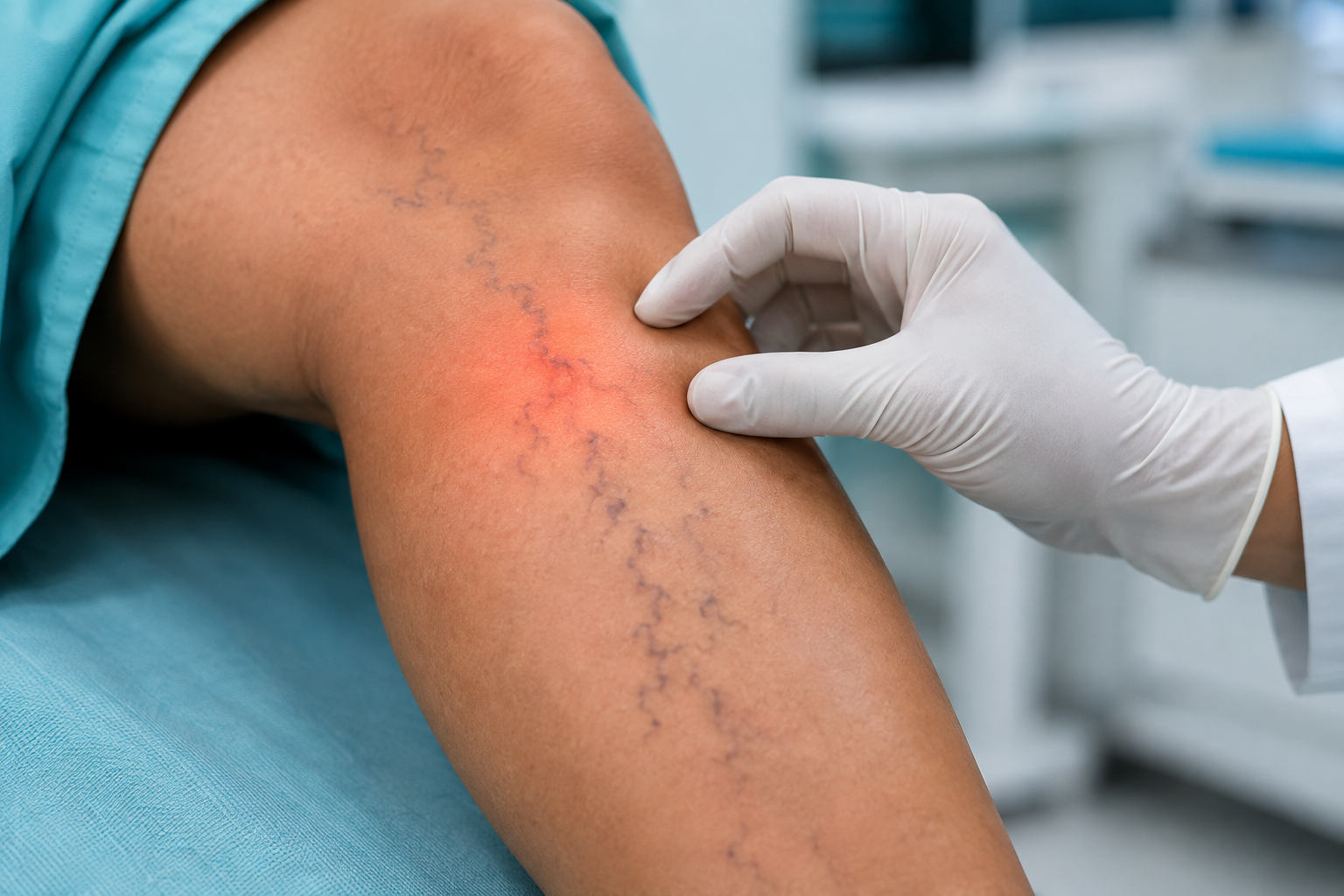
Many people notice visible veins on their legs and wonder whether they are "spider veins" or "varicose veins". Both involve veins close to the skin, but they look and feel different. This short guide focuses only on telling them apart. For varicose vein symptoms, the Doppler scan and when to see a surgeon, read our article on varicose veins symptoms and Doppler scan.
What are spider veins?
Spider veins (also called thread veins or telangiectasias) are very thin red, blue or purple lines just under the skin. They often look like a spider's web or tree branches, usually on the thighs, calves or ankles, and sometimes on the face. They are generally flat. Many people have no symptoms, though some notice mild itching or burning.
What are varicose veins?
Varicose veins are larger, swollen and twisted veins, often blue or dark purple, that may bulge above the skin. They develop when small valves inside the leg veins do not work properly, so blood pools and the vein stretches.
Key differences at a glance
| Feature | Spider veins | Varicose veins |
|---|---|---|
| Size | Very thin, thread-like | Thicker, rope-like |
| Feel | Flat; cannot usually be felt | Often raised; can be felt under the skin |
| Colour | Red, blue or purple | Blue or dark purple |
| Pattern | Web or branch-like clusters | Single twisted lines or bulges |
| Symptoms | Often none; sometimes mild itching | May cause heaviness, aching, swelling or cramps |
A simple self-check (not a diagnosis)
- Run your fingers gently over the vein. If it is flat and very thin, it is more like a spider vein.
- If it is raised, twisted or looks like a cord, it is more like a varicose vein.
- Notice whether your legs feel heavy or swollen by evening.
This only helps you describe what you see. A doctor's examination is needed to know what is happening in the deeper veins.
Why spider veins can still be worth a check
Spider veins are often a cosmetic concern. But they sometimes appear together with an underlying vein valve problem. If you have spider veins along with aching, swelling, skin darkening near the ankle or visible bulging veins, a vein check is a good idea. The varicose veins symptoms and Doppler scan article explains how veins are assessed, and our varicose veins treatment in Kompally page explains the care offered at the hospital.
When to seek urgent care
Sudden painful swelling of one leg, a red, hot and tender vein, bleeding from a vein that does not stop with pressure, or chest pain and breathlessness need urgent medical attention. Go to the nearest emergency department.
Daily habits for leg veins
For simple habits that support leg circulation, see how to prevent varicose veins naturally.
Frequently asked questions
Where do spider veins usually appear?
They are most common on the thighs, calves and ankles, and can sometimes appear on the face.
Are spider veins harmful?
Spider veins are often harmless and many people have no symptoms. If they come with aching, swelling or skin changes, a doctor can check for an underlying vein problem.
Can I have both spider veins and varicose veins?
Yes. Both can appear on the same leg. This is one reason a doctor examines the whole leg rather than only the visible veins.
Medical disclaimer
This article is for general information only and is not medical advice. Diagnosis and treatment depend on an in-person examination by a registered medical practitioner. In an emergency, go to the nearest emergency department.
Sree Nandaka Advanced Surgery Hospital, Kompally (near Ruby Block), Hyderabad. Call Us: 90008 61000.
Medically reviewed by Dr. Praveen Koduru, MBBS, MS (General Surgery), Telangana State Medical Council Reg. No. 45306
Questions About Visible Leg Veins?
If you are unsure whether your leg veins need a check, call our surgical team in Kompally.
Call Us